

Videos, Podcasts & Reading
The world still runs on oil: investing between ambition and reality

Watch the video
Listen to the podcast
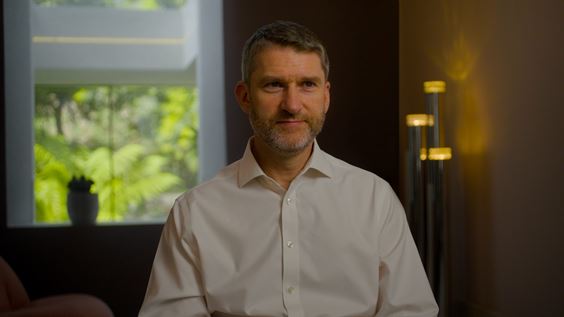
In this episode of Connected Investor, Julian Bishop and James Ashworth explore the gap between clean energy ambitions and ongoing reliance on oil and gas. They discuss why demand for fossil fuels persists, the challenges of decarbonising key industries, and the powerful role of geopolitics in shaping global energy markets.
This is a marketing communication. Please refer to the key information document or KID before making any final investment decisions. Investing involves risk. The value of an investment and the income from it may fall as well as rise and investors might not get back the full amount invested. Past performance does not predict future returns. The mention of any particular security or strategy should not be considered as a recommendation. For further information on the Brunner Trust please go to www.brunner.co.uk.
JAMES ASHWORTH (JA): I don't think energy's ever really been just an economic issue. It's a geopolitical one as well, not only today but for most of the last century.
JULIAN BISHOP (JB): But I think this goes to the heart of what equity investment is. You're never investing with perfect clarity or certainty. You're always buying in the face of uncertainty.Hello and welcome to Connected Investor from the Brunner Investment Trust. I'm Julian Bishop.
JA: And I'm James Ashworth.
JB: Now one of the biggest themes in markets over the past few years has been the energy transition. How we move away from fossil fuels towards something cleaner.
JA: But at the same time, we've had energy shocks, geopolitical tensions and a reminder that the world still runs quite literally on oil and gas.
JB: So in this episode of Connected Investor, we want to unpack that tension a little. We want to consider not just what the future might look like, but what the reality looks like today and what that might mean for investors. So, James, let's start with the obvious contradiction. So, on the one hand, there's a huge push towards decarbonisation.
JA: Absolutely.
JB: And on the other hand, demand for oil still seems to be going up. So how do we reconcile those two things?
JA: That's a great question, Julian. I think the important thing to remember here is that the global population is still rising and the global affluence levels are rising as well, which drives increased energy needs, an increasing number of people wanting to heat houses to travel, to drive, to consume goods, which often require energy to manufacture. So even though we've spent billions of dollars building renewable energy, it's been overwhelmed to a degree by the increasing demand for energy globally. I think it's important to remember that although there's a large desire for energy use to transition, there's a lot of things that are actually quite difficult to move away from oil and gas. So if you think about cars or aeroplanes or lots of plastics, which are oil derived products, these are things where even though we want to make a transition towards greener forms of energy, things are actually quite difficult to move from the current oil based sources.
JA: We’ve made little starts in things like electric vehicles for example. Energy generation for the grid, but they're still, as you say, lots more to go. And even though we've got somewhere on this journey, you know, oil demand is still rising.
JB: One of the key points here is that we talk a lot about renewables, but it refers to electricity. And electricity is actually quite a small part of the overall energy system. So, there's a well-known, in certain circles, energy economist called Vaclav Mill. He writes these very long, very dull books. Bill Gates likes them, he recommended them, but he talks about the fact that, I think it's still about 80% of energy consumption, Primary energy consumption is still from oil and gas. So 20% is electricity something in that order of magnitude and the 80% that is still oil, and gas is necessarily the part that's harder to decarbonise. So, we are making progress on cars.
JB: But freight trucks still predominantly run on oil and gas, aviation, oil and gas. Plastics are quite a big part of the demand for oil. Chewing gum rather revoltingly, made from oil, etc., etc. And there's also a very stubborn link between energy use and GDP. So, whether we like it or not, all economic activities virtually have some sort of energy included in them. And that includes things as basic as food, fertilisers, etc., etc. So, the reality is that the world still runs on, on fossil fuels, by and large. And there's an expression in economics called inelasticity. So, the idea is here, even if you double the price of energy of oil and gas, it's very, very hard to use less. So, whenever the oil price spikes, it's basically a tax on consumers, a tax on businesses. And we're seeing something of that at the moment. So, you can double the price of oil and people still have to use it, effectively.
JA: Yeah, I mean the energy transition is very real, but it's happening much more slowly than maybe people hoped, five or ten years ago.
JB: Exactly. And then of course, there's geopolitics on top of that. And we're seeing that very clearly, at the moment in Iran, and in Ukraine. So why don't you touch on that?
JA: Yeah. I mean, that's an interesting point as well. You know, most of this oil and gas, that we rely on is sourced from a fairly small number of large basins of oil and gas, so particularly in the Middle East, but there's also some in, in Russia, there's some in North America as well. Now as we've seen with the conflict in Ukraine and the more recent conflict in the Middle East, these locations are often not as geopolitically stable as we would like. And supply disruptions can cause big movements in the price of energy.
JA: As you pointed out, demand is very inelastic. So, when supply moves, even just a few percentage points, a few percentage points drop in the amount of oil supplied can lead to really material changes in energy price. I guess what we've seen in places like the UK over the last few years is the energy security has become a real concern for governments, particularly in the wake of Russia's invasion of the Ukraine and the increase in gas price. The UK government put in an energy price cap to protect consumers from the impact of the full impact of higher gas costs. So, countries realise that the dependence on oil and gas is a real vulnerability that's accelerating the desire to migrate to cleaner, renewable forms of energies where you don't have the reliance on more geopolitically unstable countries. But it's a slow transition and it's very, very costly. You know, I don't think energy's ever really been just an economic issue.
JA: It’s a geopolitical one as well. Not only today, but for most of the last century or more.
JB: Now, of course, energy companies as investments. Let's bring it back to the trust. They haven't been fashionable, I would say, for quite a long time. They haven't worked that well for a long time as investments. But there are some reasons why we think they have been worthwhile having in the portfolio. I mean, the first is that particularly in Europe, the ESG agenda alone forbade people from owning them, therefore maybe, suppressing valuations, but the underlying businesses, they can generate very significant free cash flow, particularly when energy prices are elevated, as we're seeing at the moment. And some of them have pretty long-lived physical assets. And I think for, for many years, assets like that have been somewhat out of favour. People have preferred asset like businesses, which have certain advantages. But there is something nice about having physical assets that you can that you can wrap your arms around.
JB: In a sense.
JA: There’s no AI risk, AI disruption risk to energy. I mean, I can't run my car on AI. It's got to run on oil.
JB: Exactly, and you can't make your plastic lunchbox out of AI either. There is still a physical world in which we live, and energy is obviously at the core of that. So why don't you talk about one of the stocks that we added quite presciently, a couple of months ago before all this, situation in the Middle East developed, ConocoPhillips, why don't you talk a little bit about the rationale for that addition to the portfolio?
JA: this was a very recent addition to the Brunner Investment Trust. It turned out to be very timely. We bought it before the conflict in Iran began. Our thesis was not based on a view that higher oil price was likely or certain. We did think that it was unlikely that the oil price would fall materially. You know, if we look at the amount of oil that's produced, at various points of cost.
JA: So there's like it's called an industry cost curve. How much oil can you produce at what cost per barrel? We thought that you were probably close to the point where there wasn't much downside to the oil price. If the oil price fell further, lots of supplies would probably leave the market and that would protect prices. But we saw that there was at least the opportunity or the potential that something might go wrong in the world. You know, the world is not a perfectly stable place.
JB: It’s not all peaches and cream.
JA: It’s not all peaches and cream or Magnum ice cream. You know things clearly do go wrong occasionally. As we've now unfortunately seen in Iran. So, we felt it was a bit of an asymmetric bet, if you like, on potentially higher oil prices. But more importantly for us, as you mentioned, we focus on the cash generation that a business can generate. And as we looked at kind of ConocoPhillips looking out to the end of this decade, we saw that there probably be a very large expansion in the amount of cash that this business would be generating.
JA: ConocoPhillips has spent the last few years building a huge new oil facility in Alaska, has absorbed a huge amount of their free cash flow. But this is now coming to completion. And over the next few years, it will start producing oil, increasing the amount of cash flow that ConocoPhillips will be producing. So we were, when we invested, we thought we would be getting a very attractive cash yield by the end of the decade, even if oil prices didn't increase. And so, if oil prices stay at their current elevated levels, the cash yield we would be getting on our purchase price would be very attractive. It was a fairly simple thesis. It wasn't based on a view of the oil price. It was based on the fundamental cash generative ability of ConocoPhillips. As we estimated it over the rest of the decade.
JB: So, yes, in that instance we made the investment in a at a time when the oil price was quite low.
JB: Then the oil price rocketed because of what's happened in Iran from an investment perspective, but obviously not from the perspective of the world. That means it's been a good thing for our investment. Obviously when you talk like that, it can sound very much like you've lost your moral compass. But that's the reality of investing. From an investment standpoint, it doesn't obviously always work out like that. We were confident at the time that it would have been a good investment, irrespective of what happened to the energy price. But inevitably, when you get these sorts of conflicts like you have in Iran at the moment, energy prices go up and energy equities follow. There's always risk in the world. Whenever you invest, you're investing in the face of uncertainty. You have upside risks, downside risks. I guess in this instance the investment risk was to the upside. But it's a reminder that oil and gas, energy assets are often located in parts of the world where there is conflict, where there is a lack of stability.
JB: So, you know, we're always investing in the face of uncertainty. Geopolitics is one source of that. Obviously, for the energy sector, it's more pronounced than it is for many others. But I think this goes to the heart of what equity investment is. You're never investing with perfect clarity or certainty. The world simply isn't like that. You're always buying in the face of uncertainty.
JA: Yes, absolutely. And that uncertainty could also extend to the risk of you not being able to keep the assets. In the case of ConocoPhillips, most of these assets are in North America, where the rule of law is very strong. Shareholder protections are good. Property rights are well proven. If you look at many other oil and gas companies, they have assets in geographies which are much less stable, either politically or economically. If you look at companies that we own, such as Shell or TotalEnergies, they have assets in countries like Nigeria, Qatar, Angola, where property rights are just less proven, shareholder protections are less mature.
JA: And so one of the things we liked about ConocoPhillips was that the assets were located in a fairly low risk geography.
JB: Yes, and you can see from the valuation that you pay a bit of a premium for that. So, it's interesting. Generally, the US majors trade at a premium to the European majors, for example. And the European majors, you mentioned Shell and TotalEnergies there, are listed in the UK and France respectively, but their assets are largely in places like Angola, Iraq. I mean they have some in the States, some in Australia, but they're also in Brazil, etc. they're all over the world. So they do, involve taking on some of this geopolitical risk that we have talked about.
JA: From our perspective, where an asset is just as important as what the asset is. You know, even if it's a very low cost of production asset and really financially attractive, if it's in a geography with poor shareholder protections, with a poor history of corporate governance or poor history of rule of law, it may make it a very unattractive investment for us.
JB: I think that's a really important point. Investment requires trust. Equities particularly require trust and property rights. Absolutely key to that. So, let's bring it back to where we started the podcast. Namely where all this sits within the energy transition. So, there are two good reasons for the energy system to decarbonise. One of which is the environment, and the second one is the world is too reliant on energy sources from volatile regions. But the reality is this process will take decades. And as investors, we exist in the real world, not necessarily the world that we would like to see and we need to deal with that when we're making our investment decisions. What do you think this says about the investment challenge more broadly when it comes to energy?
JA: I think it's a good question. I mean, I think clearly market narratives and market sentiment often moves much quicker than the underlying reality.
JA: You know, the movement to net zero and renewable energies has been going on for 20 plus years. And yet, as you said earlier, we're still very reliant on oil and gas. That does leave opportunities where investors move to the new hot thing, The new, sexy sector, but leave behind the bits that are seen as, you know, old economy and yesterday's world. Oil and gas is a great example where maybe investors moved on to green energy more quickly than the world, actually did. And while the world is still reliant on oil and oil and gas, investors had moved their focus to the shiny new thing.
JB: Yeah. I mean, in Brunner we invest in both. So, we have some investments at the moment in the oil and gas energy sector, but we also have a couple of investments in utilities, renewables like SSC and Iberdrola. They're investing a huge amount into electrical infrastructure largely powered by renewables.
JB: And then we have some other companies like Schneider Electric that make a lot of the kit that goes into those networks.
JA: Yeah. So, you can want a different world, but you still have to invest in the one that we see today.
JB: I couldn't agree more. I think salutary lessons here about the pace of the energy transitions are probably happening more slowly than most people would like to see. Probably a reminder as well that there can be value in unpopular, unloved sectors from time to time. So, thank you. Let's wrap it up there. And thank you for watching and listening to Connected Investor. If you enjoyed this episode, do follow or subscribe and we'll see you next time. Thanks again.